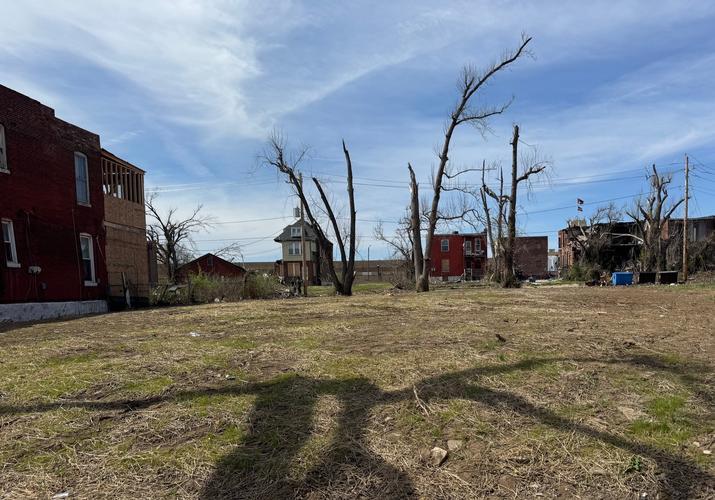
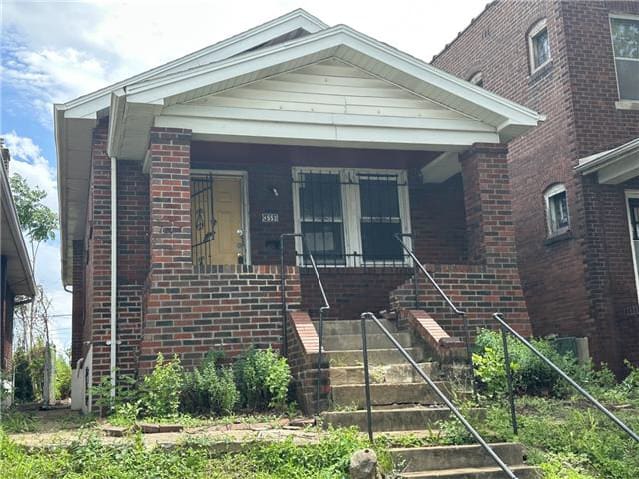
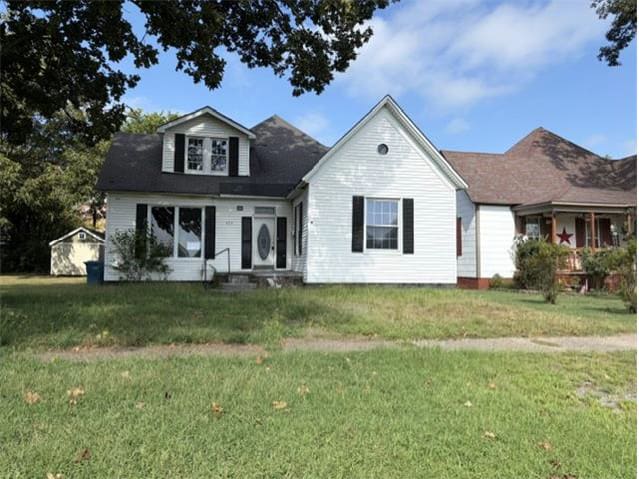
Before there was a land bank anywhere else, there was St. Louis. The Land Reutilization Authority (LRA), created in 1971, is the original — the template every state and county land bank copied — and it still lists around 9,500 city-owned properties, roughly 1,000 of them with a structure.
The original land bank
Every guide on this site describes a system St. Louis invented. The LRA takes property the city forecloses on for unpaid taxes, holds it, and resells it to put it back to productive, tax-paying use. Fifty years of that has left it with one of the deepest inventories in the country — mostly vacant lots, but a meaningful stock of as-is buildings too.
- ~9,500 active listings across the city.
- ~1,000 flagged with a structure — as-is, renovation expected.
- Application-priced. There are no stickers to sort by; every deal is a proposal you submit.
How application pricing actually works
This is the single biggest difference between St. Louis and a sticker market like Cleveland: you don't shop by price, you make a case. You tell the LRA who you are, what you'll do with the parcel, and what you'll pay. The commission reviews it.
In practice:
- Vacant lots commonly move for a few hundred dollars — less for the adjacent owner buying a side lot.
- Buildings are priced against condition and your renovation plan, not a market comp.
- Owner-occupants and community-serving reuse get the smoothest path; speculative flips get the most scrutiny.
Browse the live LRA inventory to see the scale, then read the how-to-buy walkthrough for the application mechanics.
The buying process
- Find the parcel on the map — filter to structures if you want a building rather than land.
- Prepare your proposal: proof of funds, a specific use, and a realistic offer. Vague applications stall.
- Submit to the LRA and expect a review cycle measured in weeks to months, not days.
- Budget the rehab. An as-is St. Louis building is a project — price it all-in against the neighborhood's value, not against the low offer that gets you the keys.
Why St. Louis rewards patience
Application pricing frustrates buyers who want to filter by cost, but it's also where the genuine deals live: a strong plan and proof of funds can win a property for far less than an open-market number. The system was designed to reward reuse, not the highest bidder — which is exactly why the worth-it math favors buyers with a real project.