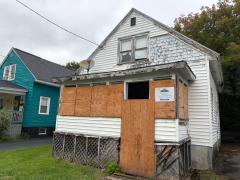
New York's land bank story is an upstate story. The state's 2011 Land Bank Act seeded land banks in the tax-foreclosure belt — Syracuse, Albany, Buffalo, Rochester, and two dozen smaller cities and counties, 30 in all — and they've become some of the country's most disciplined operators. We track ~1,700 listed properties across the New York markets in our set, with lots starting at $100 and priced houses running from about $1,000 into the six figures.
The real story is the split: Albany's lot inventory medians around $600, its houses typically list at $10,000–$30,000, and Syracuse increasingly prices through the application itself rather than a sticker. New York programs are designed to pick committed buyers over fast ones — the price tag is the start of the screening, not the end of it.
The markets we track live
Greater Syracuse Land Bank
The flagship. A published list with a clear application process — priced listings currently run about $1,000 to $160,000, and much of the inventory is priced through the application rather than listed with a sticker — owner-occupant priority, and enforcement mortgages — a lien in the amount of the required renovation that's discharged when you finish the work. It's the strictest-on-paper, smoothest-in-practice program in the state.
Albany County Land Bank
One of the most active land banks in the country by transaction count. Over 1,200 listed parcels — lots from $100 (median around $600), houses typically $10,000–$30,000 — with side-lot pricing for neighbors and steady owner-occupant programming.
Buffalo Erie Niagara Land Improvement Corporation (BENLIC)
Buffalo's land bank, now tracked live in our set — a smaller list, published without posted prices, sold through applications and periodic auctions.
Rochester, Newburgh, Broome County (Binghamton), and the rest publish smaller or less frequently updated lists — every New York land bank is profiled in the national directory with a link to its official site, and we add live tracking as their inventory becomes publicly trackable.
What's listed right now
Current counts and every tracked parcel on a map: the New York hub.
The New York buying process
Mechanically it's the standard land bank process — but New York land banks are notably thorough on three points:
- Buyer screening. Expect a check for code violations, back taxes, and prior land bank defaults in your name or LLC. Clean record, no problem.
- The renovation commitment is collateralized. Syracuse's enforcement mortgage model (used in variations elsewhere) means the rehab obligation is a recorded lien, not a handshake. Finish the scope, it's discharged.
- Owner-occupants genuinely win ties. Several programs price or sequence sales in their favor. If you plan to live in the house, say so prominently in the application.
Prices here are high enough that financing enters the picture more than in Ohio or Michigan — a $25,000 Syracuse house plus $70,000 rehab is squarely 203(k)/HomeStyle territory. The financing guide covers the tools; note that renovation-loan draw schedules fit New York's documented-scope culture well.
Reading upstate markets
Upstate values run block-by-block like the rest of the legacy-city world, with one New York twist: several of these cities (Buffalo, Albany, parts of Syracuse) have genuinely appreciating neighborhoods a short walk from land bank streets. Renovated comps can be strong — check them the first-timer way, block by block, and don't assume the whole city trades at the land bank price.
Start here
- Live New York inventory map
- All 30 New York land banks, profiled
- Government-owned homes explained — where land banks fit among HUD, USDA, and tax sales