Texas land banking plays a different game. There was no mass abandonment to recycle, so instead of 20,000-parcel lists, the Houston Land Bank curates a short list of lots, median posted price around $3,000, and feeds most of them to affordable-housing builders. For an individual buyer that changes the playbook: you're navigating programs, not scrolling a bargain bin.
So the honest answer to "is there a land bank near me in Texas?" is usually no. Outside Houston and Dallas, cheap government-owned property moves through two other routes, both covered below: county tax foreclosure sales and HUD and Fannie Mae HomePath homes.
Who sells land bank property in Texas
Three land banks operate in the state — all profiled in our directory:
- Houston Land Bank (2000) — the big one, descended from the city's LARA tax-lot program. Vacant lots concentrated in Houston's historically disinvested neighborhoods, with a mix of builder, community, and adjacent-owner programs.
- City of Dallas Urban Land Bank Demonstration Program (2004) — Dallas's program under the state's land bank demonstration law, oriented to affordable-housing developers.
- Texas State Affordable Housing Corporation — ACT Land Bank (2008) — a statewide vehicle that banks land for affordable development rather than selling retail.
What's listed right now
The tracked inventory is all vacant land — no flagged structures — and mostly in Houston. Browse the live Texas map to see which neighborhoods the lots cluster in; proximity to active new construction is the tell for which programs a lot will move through.
The Texas buying process
The standard land bank playbook applies — full guide here — but program fit decides everything in Texas:
- Find the parcel on the map and check whether it has a posted price; most Texas parcels price through their program.
- Match yourself to a program. Builders pre-qualify for new-construction lots; individuals fit adjacent-owner and community programs. Applying to the wrong program is the most common dead end here.
- Apply with proof of funds and a plan. Houston weighs end use — affordable units especially — over top dollar.
- Budget past the sticker. Survey, closing, and site work usually exceed a $3,000 lot price. The first-timer's guide covers building that budget.
Texas tax foreclosure sales
This is where most cheap Texas property actually changes hands. When a county, city, or school district forecloses for unpaid taxes, the sheriff or constable auctions the property on the first Tuesday of the month, at the courthouse or, in more counties every year, online. Opening bids start at the judgment amount or the property's adjudged value, whichever is lower.
Two details decide whether a Texas tax sale is a bargain or a trap:
- Struck-off property. Parcels nobody bids on are struck off to the taxing units and resold later, by bid or private sale, sometimes for less than the taxes owed. Ask the county tax office or its delinquent-tax law firm for the resale list.
- The redemption window. A former owner can buy the property back for two years after the sale if it was a homestead or agricultural land, and 180 days for everything else (Tax Code 34.21), paying you a 25% to 50% premium. Don't renovate until the window closes.
Tax-delinquent property in Texas walks through the full process, and tax liens vs tax deeds explains why Texas is a deed state.
HUD and Fannie Mae HomePath homes in Texas
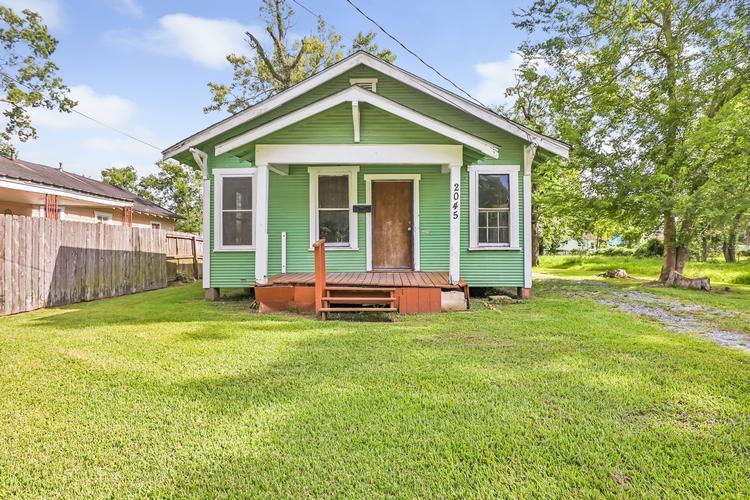
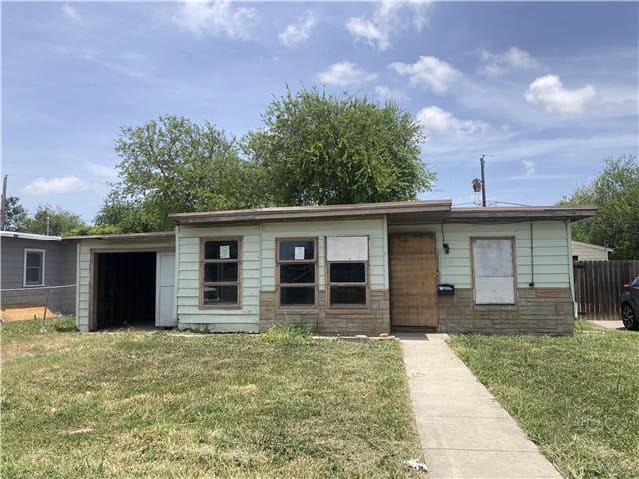
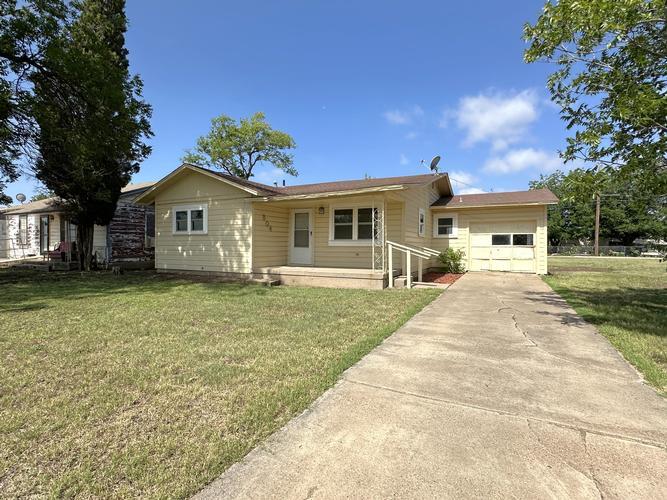
If you want a house rather than a lot, the federal foreclosure programs list far more Texas inventory than any land bank. On October 3, 2026 we tracked 127 HUD homes and 205 Fannie Mae HomePath homes across the state, the cheapest in the $40,000s, with medians closer to normal Texas home prices. These are finished houses, priced to the market, not $3,000 lots.
- HUD homes are FHA-insured foreclosures. Owner-occupants get an exclusive bidding window before investors, and bids go through a HUD-registered agent.
- HomePath homes are Fannie Mae foreclosures. Owner-occupants get the first 20 days of every listing under the First Look program.
Both show up on the live Texas page and the Texas map, next to the Houston lots, and land bank homes vs HUD homes vs foreclosures compares the three side by side.
Where the value concentrates
Houston's land bank lots sit in neighborhoods where the metro's growth is the underwriting: an infill lot near active new construction can be worth multiples of its program price to the right builder. That's exactly why the land bank screens buyers — the arbitrage is the subsidy, and it's reserved for people who build. Individual buyers do best on adjacency (side lots guide) or small community programs. If you want volume and posted prices instead, the Midwest lists — Ohio, Michigan, Tennessee — are the better hunting grounds.
Start here
- Live Texas inventory, including HUD and HomePath homes
- Set an alert for new Texas listings
- Tax-delinquent property in Texas
- All Texas land banks, profiled
- What is a land bank? if the model is new to you